Brisbane Caravan Repair Guide

CARAVAN WATER DAMAGE
SIGNS AND CAUSES

Water damage is one of the most common and most costly problems affecting caravans. Catching it early can mean the difference between a contained repair and a major rebuild.

Quick Rule of Thumb

A musty smell, soft flooring or staining around windows and vents are the earliest warning signs. The longer water sits inside the wall or floor structure, the more material it affects.

Storm, hail and flood damage account for a large share of all caravan claims
Water damage is often hidden until it's already extensive
Seals around windows, vents and hatches are the most common entry points
Caravans left unused for long periods can hide water damage longer

If you notice any signs of water entry, it's worth investigating sooner rather than later, since water damage rarely stays contained on its own.

Why Water Damage Is Such a Big Problem for Caravans

Caravans spend a lot of time exposed to the elements, parked in driveways, storage yards or on the road through rain and varying weather, and unlike a house, they rely on a network of seals, joins and seams to keep water out rather than a single continuous roof and wall structure. Every window, vent, hatch, awning mount and roof seam is a potential entry point if the seal around it fails.

Once water gets past a seal, it doesn't just sit on the surface: it tracks into the wall or floor cavity, where it can sit against timber framing, foam core or plywood backing for a long time before any visible sign appears on the inside or outside.
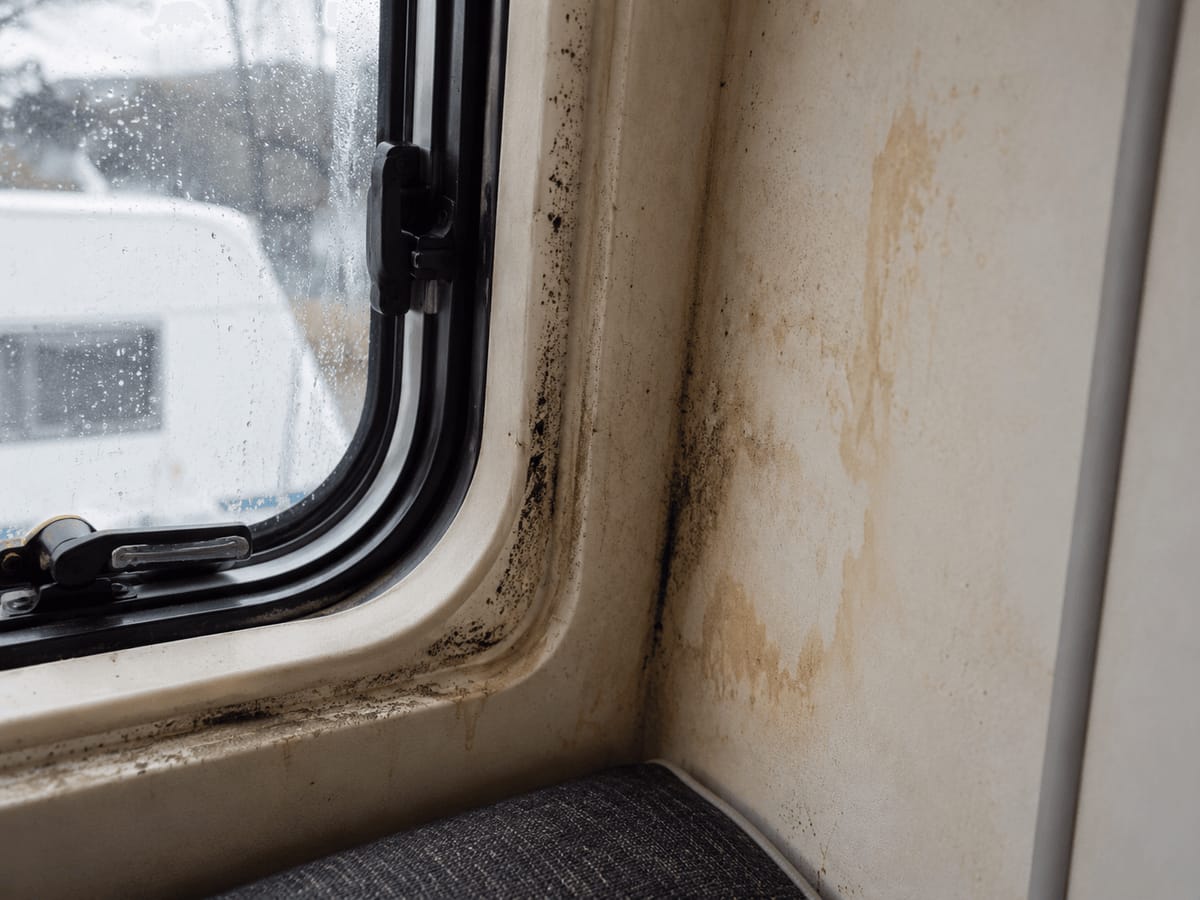
Caravan water damage signs

Explore Common Water Damage Points

Loading Model

Auto-rotating — turn on to drag & zoom

Common Causes of Caravan Water Damage

Failed or aged sealant around windows, vents, hatches and roof seams
Roof membrane wear or damage allowing water to track underneath
Awning or accessory mounting points that weren't properly resealed
Storm, hail or flood events causing sudden water intrusion
Condensation building up inside wall cavities over time
Cracks or impact damage providing a new entry point for water
Caravans left stored for long periods without regular checks

Signs of Water Damage to Look Out For

Soft or spongy flooring — Walking across a floor that gives, flexes or feels weak underfoot is one of the clearest signs water has affected the floor structure.
Staining around windows, vents or skylights — Discolouration, dark marks or watermarks near any seal point is a strong indicator water has been getting in.
A musty or damp smell — Even without visible signs, a persistent musty odour inside the caravan often points to trapped moisture and possible mould growth.
Bubbling or sagging ceiling panels — Sagging, rippling or bubbling on ceiling panels can indicate water has tracked down from the roof and pooled above the lining.
Visible mould or mildew — Black or green spotting, particularly around seams, corners or low-lying areas, is a sign moisture has been present for some time.
Rust on metal fittings or frame components — Rust appearing on screws, brackets or frame sections inside the caravan can indicate ongoing moisture exposure in that area.

Why Storm and Hail Damage Is So Common

Storm, hail and flood-related damage is a common cause of caravan insurance claims, and it's easy to see why. A single severe weather event can compromise multiple seals or panels at once, sending water into the caravan from several points simultaneously, rather than the slower, single-point leaks that develop gradually over time.

This is part of why a caravan that's been through a major storm should generally be checked thoroughly afterwards, even if no obvious damage is visible straight away, since water entry isn't always immediately apparent from the outside.

Why Caravans Often Hide Water Damage Longer Than Expected

Caravans are frequently left unused for weeks or months at a time between trips, which means water damage can develop and spread significantly before anyone notices. A small leak that started during one trip away might not be discovered until the next time the caravan is used, by which point the affected area can be considerably larger than it would have been if caught early.

This is one of the most important reasons to do a basic check of seals, windows and vents periodically, even when the caravan isn't actively being used.

Frequently Asked Questions

How do I know if my caravan has water damage if I can't see anything obvious?
A musty smell, soft flooring, or staining around windows and vents are usually the first signs, even before visible bubbling or damage appears on the surface. If in doubt, it's worth getting it checked.
Can water damage in a caravan be repaired?
In many cases, yes. The repair approach depends on how far the moisture has spread and whether the underlying structure (timber framing, core material) has been affected.
Is water damage covered by insurance?
It depends on the cause. Sudden events like storms are generally more straightforward to claim, while damage from a slowly failing seal that was never addressed can be assessed differently by insurers.
How often should I check my caravan for water damage?
Checking seals, windows, vents and hatches every few months, and especially after any major storm or before a long trip, is a good habit for catching issues early.

Let's Discuss Your Repair

If you need fibreglass repairs in Brisbane or South-East Queensland, get in touch with us today. We're happy to discuss your repair and provide advice on the best solution.

WE'LL AIM TO GET BACK TO YOU WITHIN 24 HOURS

Phone

Disclaimer: The information on this page is general guidance only and is not a substitute for a professional inspection or repair assessment. Caravan construction, age, prior repairs and hidden damage can vary significantly. If you suspect water intrusion, structural weakness or safety-related issues, consult a qualified repair professional before relying on self-checks alone.