Brisbane Caravan Repair Guide

CAN CARAVAN DELAMINATION
BE REPAIRED?

Yes, caravan delamination can often be repaired. The key question is how far it has spread and whether moisture has compromised the core material underneath the fibreglass skin.

Quick Rule of Thumb

A small bubble or soft patch can sometimes be a contained repair. Widespread bubbling, soft walls, or a musty smell usually means the problem has spread further than it looks.

Small, isolated delamination is often repairable without major rebuilding
Widespread bubbling or softness usually means moisture has spread through the core
A musty smell is a strong sign of trapped moisture
The longer it's left, the more material is usually affected

If you're not sure how far it's spread, it's safer to get it checked early rather than wait for it to get worse.

What Is Delamination?

Delamination happens when the layers that make up a caravan's wall or panel separate from each other, typically the outer fibreglass skin lifting away from the core material underneath, whether that's foam, plywood or another bonded layer. Once that bond fails, moisture often gets in behind it, which accelerates the problem and can lead to rot, mould or structural softness in the wall.

It usually shows up as a bubble, bulge or soft patch on an otherwise flat panel, sometimes with a slightly different colour or texture where the layers have separated.
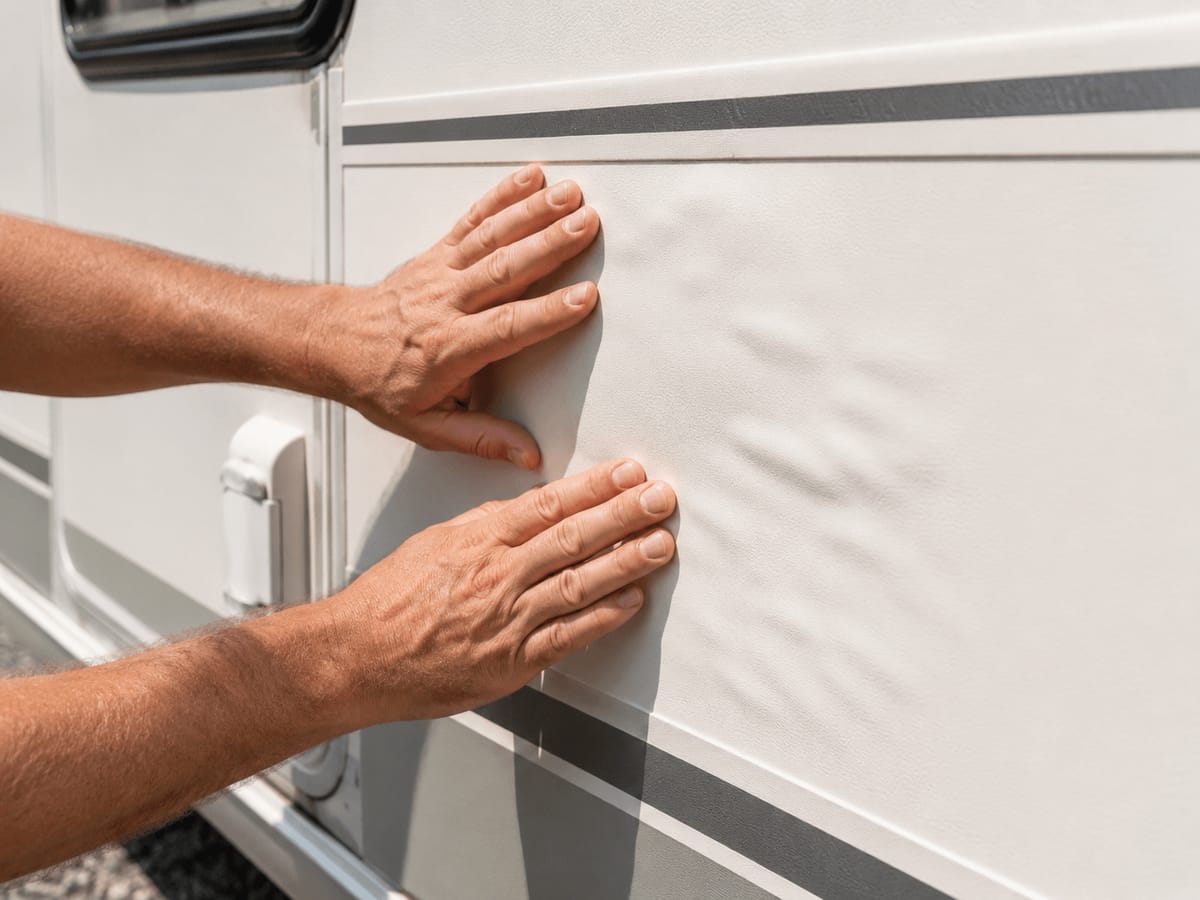
Caravan delamination inspection

Explore Where Delamination Commonly Occurs

Loading Model

Auto-rotating — turn on to drag & zoom

Common Causes of Caravan Delamination

Water entering through failed seals around windows, vents or hatches
Age and breakdown of the original bonding adhesive
Impact or flex damaging the bond between layers
Poor manufacturing or panel construction
Long-term sun and heat exposure weakening the bond
Previous water damage that was never properly dried out or repaired

Signs of Delamination to Look Out For

Bubbling or bulging panels — A raised, uneven patch on an otherwise flat wall or panel is one of the clearest signs the layers have separated underneath.
Soft or spongy walls — If pressing on the wall gives more than it should, moisture has likely affected the core material behind the skin.
Discolouration or staining — Water marks, dark patches or staining on interior or exterior panels often point to moisture sitting behind the surface.
A musty or damp smell — This is a strong indicator of trapped moisture and potential mould growth inside the wall structure, even if nothing looks obviously wrong from outside.
Visible separation at seams or edges — Where panels meet, lifting, gapping or a visible seam where there shouldn't be one can indicate the layers are pulling apart.

How Far Has It Spread? Why This Matters

Delamination rarely stays exactly the same size it started at. Once moisture gets behind the outer skin, it tends to spread sideways through the core material, often further than what's visible from the outside. That's why a small bubble can sometimes turn out to be a much larger affected area once the wall is opened up.

This is the main reason delamination repairs vary so much in scope. Two caravans with a similarly sized bubble on the outside can need completely different levels of repair depending on how far the moisture has actually travelled underneath.

Can It Be Repaired, or Does It Need Replacing?

In many cases, yes, it can be repaired. If the affected area is contained and caught reasonably early, the damaged section can be cut back, dried out, and rebuilt with new core material and a properly bonded fibreglass skin, finished to match the surrounding panel.

Where delamination has spread extensively, or moisture has been sitting for a long time, the repair may need to cover a larger section of wall to fully remove all the affected material. This is still usually more cost-effective than replacing an entire panel or wall section, but it does depend on the extent of the damage once properly assessed.

Why Leaving It Too Long Makes the Repair Bigger

Once moisture is behind the skin, it doesn't stay still. It continues to spread through the core material, weaken the bond further, and in some cases lead to mould growth or rot in timber-framed sections. What might have been a relatively contained repair early on can become a much larger job if left for months or years.

That doesn't mean every small bubble is an emergency, but it does mean delamination is generally worth assessing sooner rather than later, since the cost and scope of the repair tend to grow the longer it's left.

Frequently Asked Questions

Can a small bubble in my caravan wall be repaired without replacing the whole panel?
Often, yes. If the delamination is caught early and contained to a smaller area, the affected section can usually be repaired without needing to replace the entire panel.
How do I know if it's delamination or just a dent?
Delamination typically shows as a raised, bubbled or uneven patch rather than a sharp dent, and the wall often feels soft or spongy in that area. A dent from impact usually has a clearer, more defined shape.
Does delamination always mean water damage?
Not always, but it's very commonly linked. Moisture getting behind the outer skin is one of the most common causes, so where there's delamination, it's worth checking for water entry as well.
Is delamination covered by insurance?
It depends on the cause and your policy. Sudden events like storm damage may be covered, while delamination from gradual wear or unaddressed seals may be treated differently. Worth checking your policy or speaking with your insurer directly.

Let's Discuss Your Repair

If you need fibreglass repairs in Brisbane or South-East Queensland, get in touch with us today. We're happy to discuss your repair and provide advice on the best solution.

WE'LL AIM TO GET BACK TO YOU WITHIN 24 HOURS

Phone

Disclaimer: The information on this page is general guidance only and is not a substitute for a professional inspection or repair assessment. Caravan construction, age, prior repairs and hidden damage can vary significantly. If you suspect water intrusion, structural weakness or safety-related issues, consult a qualified repair professional before relying on self-checks alone.